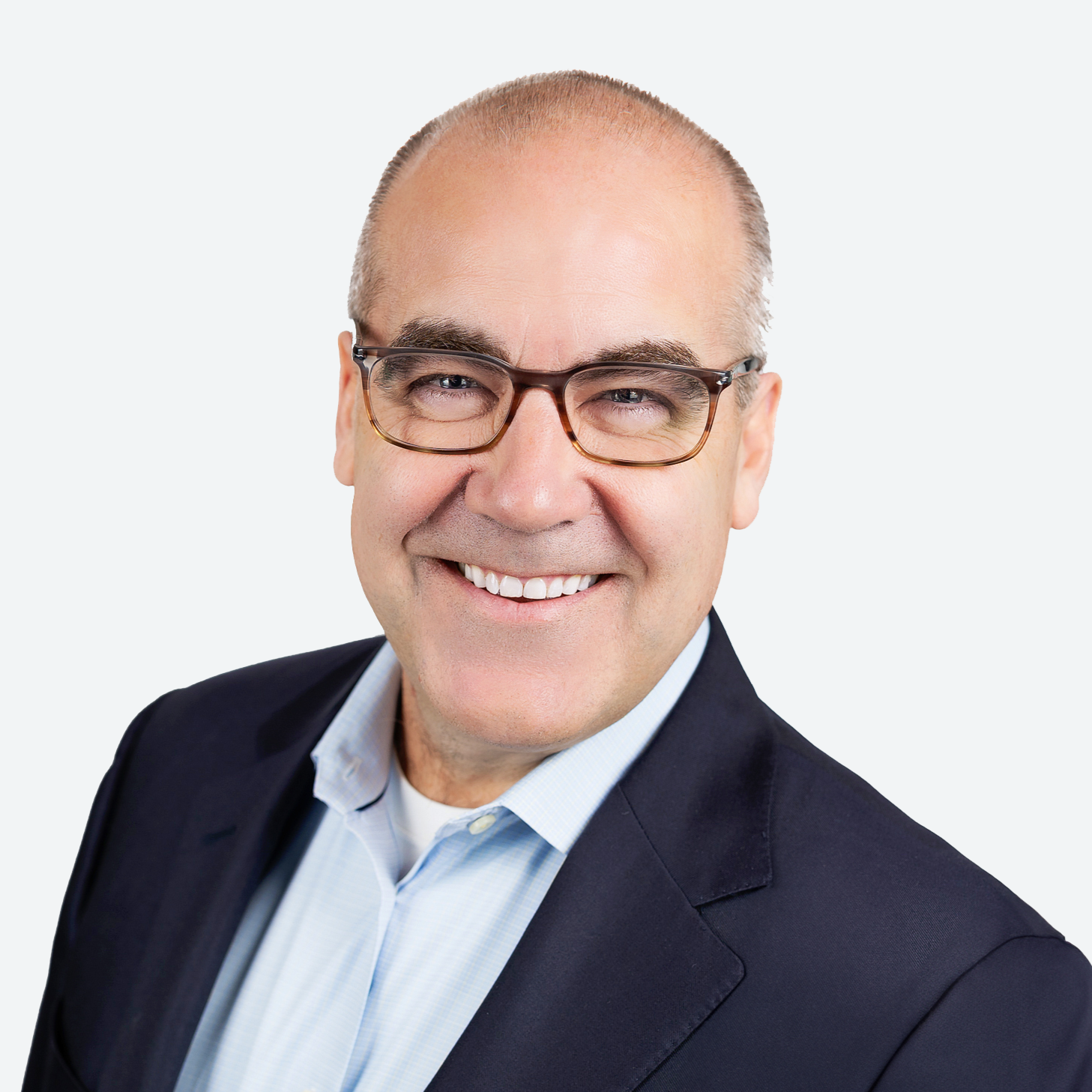
Kevin Minas [KM]: In this episode of The Art of Boring, I sit down with Brian Carney, lead PM of the Mawer Global Credit Opportunities Strategy. This quarter, geopolitical escalation, an energy shock, and shifting rate expectations all reshaped the backdrop for global fixed income markets. We cover what that has meant for credit investors, a few opportunities our bottom-up research team has uncovered in an otherwise rich market, and timely market stories, including massive AI-related bond issuance.
DISCLAIMER: This podcast is for informational purposes only. Information relating to investment approaches or individual investments should not be construed as advice or endorsement. Any views expressed in this podcast are based upon the information available at the time and are subject to change.
[KM]: Hi, Brian, nice to see you today.
Brian Carney [BC]: Good to see you, Kevin. Looking forward to talking some credit with you.
[KM]: Absolutely. I think it's been a couple of quarters since you were last on the podcast. A lot has happened in the markets in the last few months. In particular, probably best to start with, we've seen a major shift in the macro environment over the last few months. Of course, the ongoing conflict between the U.S. and Israel and Iran, and the impact that's had on the global energy shock, big move up in oil prices and inflationary concerns, at least, are back on the table, sort of at the forefront of the market's concerns. Some of those interest rate cuts that the market generally was expecting, certainly in Canada and I think the U.S., that seems to be largely priced out of the markets. If anything, hikes are now back on the table. That's kind of the macro backdrop—a very big shift quarter over quarter. From your perspective as a credit portfolio manager, how did this backdrop affect global credit markets?
[BC]: Maybe I'll start just to give a couple of examples of how those inflation expectations have fed through to market expectations on interest rate movements by central banks. At the start of the year, if you looked at the Federal Reserve, the market was predicting two cuts during 2026. Right now, they're predicting no cuts. The market is saying overnight rates will end the year at 3.75%, which is where they are now. Big shift. If you look at the ECB, the European Central Bank, at the start of the year, markets were predicting they would do nothing this year. Now the markets are saying they're going to hike three times. Things have definitely changed, perceptions have changed, and expectations have changed.
If you think about a borrower, the rate a borrower pays is a combination of a benchmark yield plus a credit spread. Let's talk about benchmark yields. The first impact on credit markets has been pressure on benchmark yields as those inflation expectations have shifted. Central banks generally meet 7 or 8 times a year, and there may be some type of interest rate movement. Yields change in markets every day. Since the start of the conflict, if you look at the U.S. 2-year treasury, yields are up about 40 basis points. U.S. 30-year yields are up about 20. Those are big moves in interest rate markets. Yields are higher and generally yield curves are flatter. That's kind of true across all major bond markets.
As it relates to credit spreads, the second half of the borrower paying formula, they've widened, but I would say not all that much given all the uncertainty that these conflicts have caused. We're seeing some changes and challenges in lower quality credit markets like private credit, which hopefully we'll get a chance to talk about. Investment-grade spreads, so higher quality companies, those are about 10 basis points wider. High-yield spreads, so lower quality companies, those are about 40 wider. Again, those numbers may sound fairly significant, but that still leaves credit spreads for all borrowers well below long-term averages.
If you take the combination of higher benchmark yields and marginally wider credit spreads, it means it's costing borrowers a little bit more, but I would say not enough to be really problematic, at least not yet. Transactions are still getting done, most notably in investment-grade markets. Those higher quality companies, that's the biggest part of the credit market. There are some cracks in other parts of the credit markets, and again, we can talk about that in a bit.
The last point I would make is what if the conflict ends? And hopefully it does. Best case, oil prices fall, inflation fears subside. I think in that scenario, we go back to concerns we had before the conflict started, which is the high U.S. debt and deficit situation, which is only going to be exacerbated by the latest conflict. Credit quality concerns will dominate, likely over inflation concerns. But make no mistake about it, there will still be concerns.
[KM]: To your point, there are risks on multiple fronts. Even if some of the risks subside, there are others that sort of reassert themselves potentially. In the context of global credit, particularly the opportunity strategy that you run, where it is benchmark agnostic, you can kind of go anywhere. Credit selection is always important in credit generally, but particularly in an unconstrained mandate where you can be very selective; or you can be basically entirely out of certain markets if you want. Where are you seeing compensation for risk right now that looks attractive? And then the flip side of that, where are you more concerned? You kind of alluded to a few pockets there. I don't know if that's where you're going to go with it, but where are you seeing some risks?
[BC]: Just to remind our listeners, the global credit strategy positioning is the aggregate result of a series of individual bottom-up credit determinations. As I just said, yields are higher than where they've been. Generally, we don't think investors are compensated for the risk of owning longer duration credit priced off a longer duration benchmark. In the credits we like, we prefer shorter duration in what we believe is an uncertain yield environment, conflict or no conflict. Although high-yield spreads are wider, again, in most cases, we don't believe investors are compensated for owning lower-quality credit. Now, there are always exceptions, but generally, we don't see value.
Those two views aggregate up into a defensive portfolio. Duration is a little over a year. High-yield is approximately 9% in a handful of credits. Again, our view is if you're not compensated for the risk, don't take the risk. Don't reach for yield, particularly in this type of environment. We would say the market still isn't pricing downside risk in high-yield generally, challenges in private credit, impact of deregulation. A lot of things are going on there. Leverage loans, longer duration credit, flat credit curves, benchmark risk, and something we may touch on later, the risk of incremental technology company borrowing, new borrowers crowding into a market that's already quite expensive.
We're looking at a number of different scenarios. What if benchmark yields move up significantly? What if high-yield spreads widen significantly? We've got a lot of names that we think could be interesting for the strategy. But right now, in most cases, we don't think you're being compensated for the risk of longer duration, lower quality. The portfolio is shorter duration, higher quality.
[KM]: Potentially a lot of names that at different prices would look a lot more attractive, but right now, not necessarily moving into them at the moment.
[BC]: Absolutely.
[KM]: You mentioned there are all those exceptions. We are obviously painting with a broad brush right now about credit markets and what pockets look attractive versus not, but there are opportunities out there. Maybe we could talk about a couple of positions that are in the portfolio and are looking attractive despite the sort of more general macro backdrop and pricing in the market at large. Why don't we start with—I think you want to talk about CoreWeave first—why don't we walk through that credit example?
[BC]: Sure. CoreWeave is smack dab in the middle of the AI revolution, if that's what we're calling it. It's responsible for the tech inside many of the data centers you see. It's got a strategic partnership with NVIDIA. It's got long-term contracts with many of the investment-grade hyperscalers you see involved in the industry. It's got a revenue backlog in excess of $65 billion, long duration, non-cancellable contracts. It is right in the heart of the AI boom.
Because it's a relatively new company and there's significant CapEx spend that it has to make, it's rated non-investment grade by the agencies. Because of that, it's yielding approximately 10%. Based on the credit profile that we see, we think it's extremely attractive, so we’ve added that name into the portfolio. That's number one. We think over time, we see the credit quality improving. As the business model is proven out, we see the chance that credit ratings will be upgraded in the future.
[KM]: I think there was a second credit you want to talk about?
[BC]: It's an agricultural chemicals company. We used to call those fertilizer companies. It's got some challenges. It's got some products that are coming off patent. It's been downgraded because of these challenges and headwinds in agriculture generally. It's been downgraded by the 3 major U.S. rating agencies from investment grade to non-investment grade. It is what we would call a fallen angel.
It's got decent liquidity, and it's got several, what we believe are, potential catalysts. It's undergoing a strategic review. It's likely to sell assets that could lead to fairly significant debt reduction. This is one case where we've actually extended into a longer duration bond because it's got a 2049 maturity that's trading just a little above 60 cents on the dollar. When we look at downside protection and margin of safety, we think we've got more than adequate coverage on the downside and some potential upside catalysts.
This bond is trading at a little over 8% yield to maturity, low dollar price, which works well with our margin of safety calculation. Again, in a market that generally we believe high-yield is expensive, another situation that we're very comfortable owning and we think is decent value for investors.
[KM]: And on the second idea there, how did that come across the team's desk? Or how did the team source that particular idea?
[BC]: Not to bore you with too much detail, but we have a piece of AI-related technology where we sort through the massive investable universe that we have for the GCO strategy, which is in excess of $20 trillion. One of our analysts, Curtis Elkington, was doing some sorts through that tool and thought this could be an interesting situation. He dug in and presented it to the team. And lo and behold, we've added it to the strategy.
[KM]: Awesome. Always nice to hear real-life examples of where AI has got some practical applications in the research process. Why don't we go back? You mentioned before about a lot of issuance with the hyperscalers. I know that's an area you all have been watching closely. For the audience's benefit, the hyperscalers, the Amazons, Alphabets, and Microsofts of the world, have not traditionally been big borrowers in the debt market. Massive free cash-flowing companies that typically just haven't taken on a lot of debt, at least relative to their size, but that has shifted. As you mentioned earlier, they are tapping the bond markets a lot. Can you walk us through what those companies in general have been doing? And then, what's the impact on the bond markets and credit markets specifically from all that activity that we're seeing?
[BC]: This started last year, 2025. As the AI boom really took off, these hyperscalers started announcing dramatic ramp-ups in capital expenditures—and you're right, these are companies that historically have generated so much cash flow that they can fund capital expenditures, they can fund dividends, and share repurchases, all within their own self-contained unit. The CapEx numbers are now so large that they're actually turning to an unconventional source of funds for them, which is the bond market, the investment grade bond market.
If you look at 2025, between Alphabet, Amazon, Oracle, and Meta, they did investment grade deals totaling about $100 billion. So again, companies that typically did not borrow in the bond market borrowed about $100 billion in 2025. Thus far in 2026, that trend is continuing. Alphabet did deals in the U.S., multi-tranche deals. They're borrowing multiple maturities in multiple markets. They borrowed in the U.S. market, they borrowed in sterling, they borrowed in Swiss francs—totaling $51 billion, all in one go. Oracle came into the U.S. bond market and borrowed $25 billion.
The others, the Amazons, Metas, and Microsofts, if you kind of assume 30% of their 2026 CapEx is going to be funded by borrowing in the bond market, that gets you to probably another $150 billion that could easily be borrowed in the investment-grade bond market. Basically, new issuers into the investment-grade bond market, huge financing requirements. I don't want to say they're price insensitive because they do care about the price. But if it costs them an extra 3-5 to 10 basis points so they can get in an extra $10 billion, they're going to pay that because they have a CapEx program that they want to fund.
All to say, lots of new borrowing into the investment-grade bond market. We think as borrowing continues this year, and likely continuing into next year, you're going to see pressure on investment-grade credit spreads. At the very beginning, I said investment-grade spreads were probably about 10 basis points wider. As these new massive issuers continue to access the investment grade market, you could see significant pressure on investment-grade spreads. This is something we're watching very closely.
These are high-quality companies. For the most part, Oracle is triple-B rated, but that's still investment-grade. Nevertheless, massive new borrowing, and we think that could easily put pressure on investment-grade spreads because all of those traditional borrowers, the banks and other industrial companies, will continue to borrow in the investment-grade bond markets. I think it's quite possible over the next 12 to 18 months, these hyperscalers could easily move into the top 10 biggest bond market issuers in the world, where historically those have been the major money center banks.
[KM]: It's almost like they're crowding out the traditional borrowers, and then to compensate for that, presumably those borrowers have to just pay more at the margin. I guess that's the idea.
[BC]: That's the idea. The losers in this scenario, if you have to pick winners and losers, are probably the lenders who chose to lend to these companies the earliest, because these companies are going to continue to come back into the bond market. As those incremental financings push spreads wider, you want to be the last one to lend them money as opposed to the first one to lend them money.
[KM]: And then just looking at the other end of the spectrum. We talked about high quality, large borrowers in the investment-grade space. On the high-yield side, banks have always been lending in the low investment-grade market, but they've more recently had to compete more aggressively with other sources of capital like private credit. I know you've talked a lot about these banks potentially having more risk of holding positions when they're underwriting a deal, holding it on their balance sheet, and then they need to offload it. In other words, they syndicate those positions out. Are you seeing a dynamic there where that is becoming more of a risk for the banks? Are they getting caught with more of these deals on their balance sheet? How do you see that market? Has that created any opportunity the way you look at the markets?
[BC]: We think there are some potential snags in the market which could lead to problems. Yes, if you think about a typical leveraged buyout, the banks provide the funding upfront that allows the deal to get done. Then typically, they syndicate out that risk to other banks, or the loans that they provided are refinanced in the bond market, but there is a time lag. Often that time lag is measured not just in weeks, but in months.
The risk for the banks is you can make a commitment when the credit markets are strong and everyone feels great, but there's a lag. Then when you actually go to distribute that risk, things have changed. If the market moves in the window before you can move that risk, all of a sudden, your underwriting starts to look pretty stale. The prices that you were willing to lend at are not the prices that you can offload that risk.
We had a situation very recently, a deal led by JP Morgan and others for a company called Qualtrics, which was buying another company. JP Morgan and the banks had lent a little over $5 billion. Qualtrics had a loan already out in the market. During the period where JP Morgan and others committed to lend them more money, the value of the loan in the marketplace went from par to 86. Those pricing dynamics changed significantly. At the moment, JP Morgan, which was out trying to syndicate that loan, has decided, you know what, we're just going to keep that risk for now. So that's one example.
I suspect if credit markets remain a little bit choppy, and we hear more about private credit having some issues, you might see more of these types of deals. It's still early, but this is kind of how it starts. One deal struggles, the market resets, and other deals face headwinds. Suffice to say, the banks always have loans on their balance sheets committed for leveraged buyouts. They typically want to syndicate those loans out. We might be at the very beginnings of banks having significant challenges syndicating out loans at the prices that they would like to. It doesn't mean they can't syndicate, they just might have to change their pricing expectations.
[KM]: I think we've covered a lot of ground. That's probably a good place to get close to wrapping up. Are there any final topics or thoughts that you wanted to share before we conclude?
[BC]: Would you be surprised if I said yes?
[KM]: Is it only one? Or is it multiple?
[BC]: Well, maybe there are multiple points in this. We've done a number of these, and I think we've always talked about the market being tilted in favor of borrowers over lenders and there being less and less differentiation between issuers that in our view have dramatically different credit profiles. I really believe this may be changing. I would call it decay. I would say that decay has started in private credit markets, and then it may expand outward from there.
What does decay look like? We have talked about, I believe in these calls, those unexpected bankruptcies we've had: First Brands, Tricolor, and MFS. Those bankruptcies tagged senior lenders, including some of the biggest names on Wall Street, with losses in excess of $1 billion. To me, that's a sign of decay.
We're seeing less confidence in the private credit model. Whether it's worries over technology exposure, rise in PIK loans, generally weak lending standards, all of those have led to recently substantial redemptions, or at least attempted redemptions, in private credit funds. Actually, this prompted a CEO of one of these private credit firms to say, quote, "We could have done a better job explaining the liquidity restrictions inherent to private credit." To me, that's also a sign of decay.
We're seeing regulators taking a closer look or at least starting to take a look at private credit markets. Remember, this is an era when in the U.S., regulation is moving to really a hands-off approach. You've got the U.S. Treasury now calling in insurance regulators for talks on private credit risks. You've got the SEC looking at rating agencies who are providing private ratings for private credit deals. Over in Europe, you've got the ECB, and in England, the BOE, looking at various elements of the private credit markets. To me, that is another sign of decay.
If you'll permit me this one, I have to read this is from Jamie Dimon, who runs one of the world's largest banks, and he puts out an annual letter. This is his comment on private credit. I've dumbed it down a little bit, but I think you'll get the gist. "I do believe that when we have a credit cycle, losses on all leveraged lending in general will be higher than expected. This is because credit standards have been modestly weakening pretty much across the board. Also, by and large, private credit does not tend to have great transparency or rigorous valuation marks of their loans." This is actually my favorite line coming up. "It has always been true that not everyone providing credit is necessarily good at it. We have not had a credit recession in a long time, and it seems that some people assume it will never happen."
So that's Jamie Dimon. He sits at the epicenter of all the major credit markets in the world at JP Morgan. I think that's interesting. We talked about hung deals in the leveraged loan market. We talked about crowding in of the hyperscalers into the investment grade market. Maybe I would close by saying the optimists will dismiss bad news, this decay, as random events. I think they would also be very quick to say private credit and public credit are separate and distinct markets, so problems in private credit don't portend problems in another.
Now, I would argue pessimists, or realists like me, will feel those tremors and know that lending is lending and that hurt in one lending market can rapidly lead to hurt in another. If there are enough tremors, I would say the wise evacuate the mountainside. I think we are close to the evacuation phase. For those who are already all in on lower quality credit, I think this could be painful. But for those who are positioned to take advantage, it could be the rarest of opportunities, Kevin. I don't know if I look excited, but I'm excited.
[KM]: Well, on that positive note, or I guess as positive as you tend to get, we could probably wrap things up there. We will eventually do one of these podcasts where maybe you become the optimist, but we're not there yet in the cycle, I guess.
[BC]: I look forward to it, Kevin.
[KM]: All right. Well, thank you for joining today. And hopefully we'll have you on soon for good news, better news.
[BC]: Thanks, Kevin.
[KM]: Hey, everyone. Kevin here again. To subscribe to the Art of Boring podcast, go to mawer.com.
That's m-a-w-e-r.com forward slash podcast or wherever you download your podcasts. If you enjoyed this episode, be sure to leave a review on iTunes, which helps more people discover the Be Boring, Make Money philosophy. Thanks for listening.
Resources:
Podcast
The Art of Boring
Jamie Dimon CEO Letter
Companies mentioned include:
• CoreWeave - AI infrastructure company with NVIDIA partnership
• Alphabet (Google parent company)
• Amazon
• Microsoft
• Meta (Facebook parent company)
• Oracle
• JP Morgan (JPMorgan Chase)
• Qualtrics - Software company involved in leveraged buyout
• NVIDIA - Semiconductor/AI chip manufacturer



 podcast