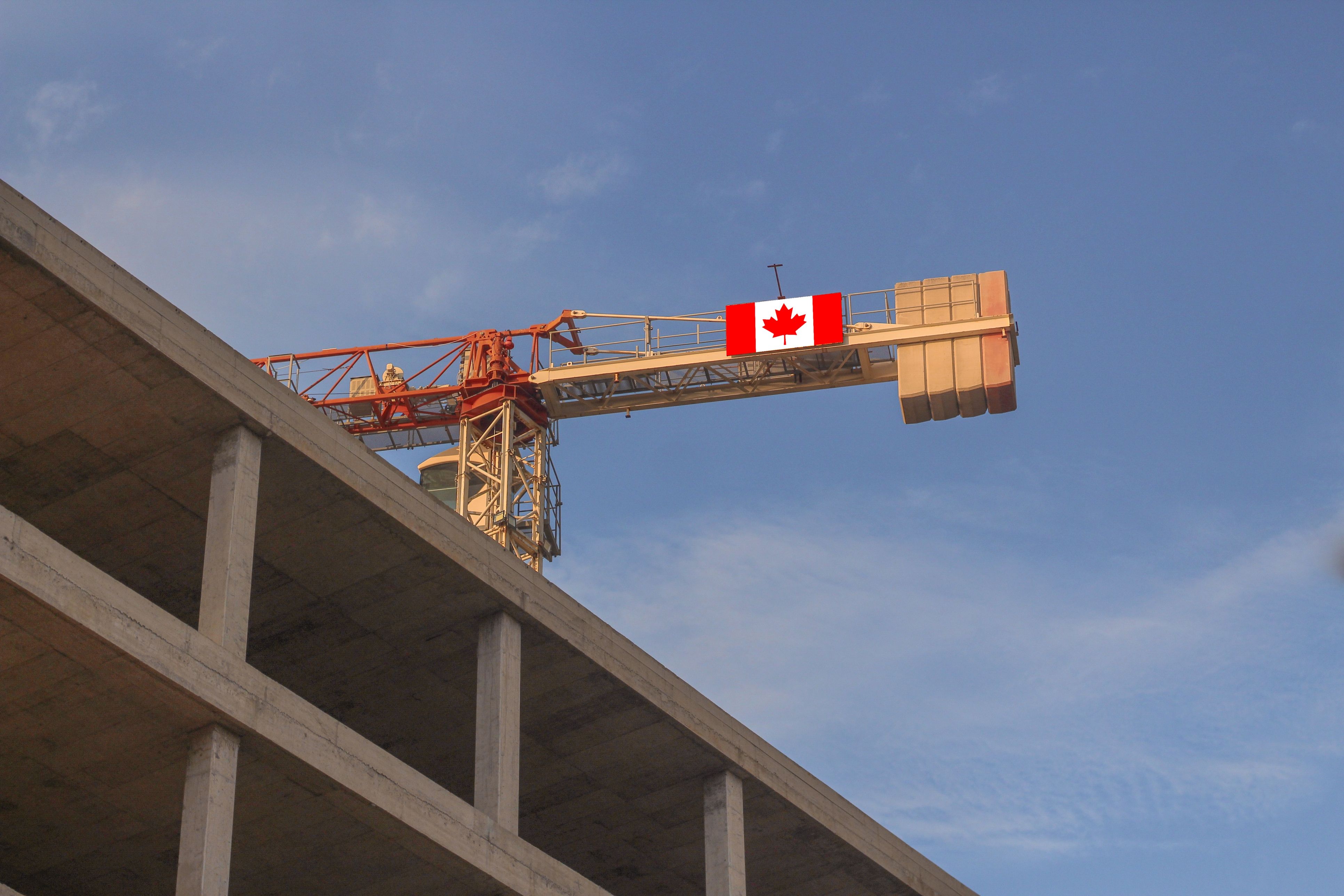
[00:00] [Kevin Minas] [KM] Today on the Art of Boring, we're exploring the idea of Build Canada: whether
Canada may finally be entering a period where it becomes easier to build major infrastructure projects, and what
that could mean for investors. I'm joined today by Dominic Drzazga, equity analyst on our Canadian small cap
strategy, to discuss what's changed post-election, where the clearest opportunities may be emerging, and what
this theme could mean for the portfolio.
[00:26] [Disclaimer] This podcast is for informational purposes only. Information relating to investment
approaches or individual investments should not be construed as advice or endorsement. Any views expressed in
this podcast are based upon the information available at the time and are subject to change.
[00:35] [KM] We wanted to have a podcast today to explain what that the Build Canada theme actually is, and
then, of course, get into the investment implications. Joining me today is Dom Drzazga, an equity analyst on our
Canadian small cap team. Nice to see you today, Dom.
[01:06] [Dominic Drzazga] [DD] Nice to see you too, Kevin. Thanks for having me.
[01:08] [KM] Jumping right in, in terms of what that Build Canada theme actually means, there's a lot of talk
about. What that is, but what, in your view, is that theme really about?
[01:17] [DD] I think, more broadly, the obvious connotation when you hear Build Canada is building the physical
infrastructure that our country so desperately needs and likely has not been investing in enough over—choose
your time period—the last decade-plus. But from an investing standpoint, I think it also goes deeper than that.
Canada is one of the five most rich nations on earth. We sit on a world-class reserve of—pick your resource—
energy, critical minerals, uranium, potash, fresh water, arable land, etc., and that's not even touching the human
capital. Yet we've spent a generation-plus not investing nearly enough into accessing those resources and
maximizing the potential of our country.
And so Build Canada, in a more holistic and long-term lens, means bridging that gap and finally accessing those
resources, whether they are the physical ones that are in the ground and all around us, the human capital that is
latent in our workforce and people graduating from our world-class institutions, and investing and bridging that
gap over the next five, ten, twenty years.
[02:30] [KM] We're going to try as much as we can to steer clear of politics in this podcast, but it is a little bit
difficult as it does overlap with this topic. Maybe the one politics-adjacent question is: do you think that anything
has really changed post-election? It's not been a year, but we've had a little bit of time to digest some of the
pronouncements. You can tell us if there's actually been any real activity.
How do you think about what the changes have been so far, and is the market getting ahead of itself, as a narrative
that's kind of taken on a life of its own? Or is it truly something that there are some legs to?
[03:01] [DD] There has most definitely been a change, and a change for the better. I think a few things need to
be highlighted here. The new administration, first and foremost, has done a great job bringing along a new
approvals law and a way to fast-track projects.
I'm sure those listening to this podcast are probably familiar with the Building Canada Act, which was passed as the
second half of Bill C-5 just over a year ago now, as of the time of this recording. That was for projects listed as
important to national interest: all federal approvals being granted all at once rather than going statute by statute,
which effectively meant timelines being shortened to a maximum of two years versus the five-year or longer
periods that were present before.
Alongside that, the major projects office has stood up as well, just under a year ago now, led by Don Ferrell, as a
single window for the proponents and for new projects coming online. That's, first and foremost, probably the
most obvious one as a tangible positive change.
A second tangible positive change would be there is now a concrete pipeline of named projects pushed into that
fast lane. The first tranche of named projects was in September of 2025, so that was five projects totaling over
$60 billion of economic activity. That included LNG Canada's Kitimat expansion, which is expected to double
Canada's LNG output, and Ontario Power Generation's small modular reactors (SMRs), which would—fun fact—
make Canada the first G7 country with an operational SMR, or small modular reactor.
And then the second tranche of named projects was not too long after that, in November of 2025. Happy to go
through them, but there were some mining projects in there. There was a North Coast transmission line in
Northwest BC announced as well—positive, fast lane, fast-tracked projects.
And then the third positive change that actually has occurred and can be pointed to and we should be optimistic
about, would be new capital vehicles. Project announcements are great, but how do you finance these projects,
both from a public and a private lens?
So, whether it's the build community strong fund, which is the $51 billion Canadian fund for the hospitals, the
transit, the water, and the bridges; there's the Indigenous Loan Guarantee Program; there's the Canada strong
fund—countless examples there as well, with those being the top three that also are a positive change versus
the prior administration.
So, I think tangible steps have been made in a relatively short period of time and have resulted in interest from
both domestic firms and foreign firms, and have resulted in investment already that we are seeing. And I'm sure
we'll talk a little bit more about it, in our communities and in the country, and it makes us optimistic for the future.
[05:59] [KM] So, concrete changes, at least on the legislative side; some announced projects, as you mentioned;
and then funding vehicles. Okay, that sounds constructive. Putting your market hat or your analyst hat on: should
a lot of this continue, the momentum continue, projects actually get executed—where do you see the clearest
beneficiaries? Either parts of the market, industry sectors, what have you, should Canada actually truly start
building more?
[06:22] [DD] This is the million-dollar question: who benefits, and what is the quantum of those benefits. But I
think it's important to take a step back and think about the time horizon when analyzing these sorts of benefits.
In the long term, the owners of the assets being built are, naturally, deductively, the ones that will benefit the
most, given they will be reaping the rewards of the cash flows from the infrastructure—let's say it's an LNG
terminal, so the tolling on exporting LNG, for example. In the long term, the owners of the assets benefit.
In the shorter term, however, these improvements and these assets and this infrastructure must be built in the
first place, and so the actual beneficiaries are not necessarily the owners of the assets, but the entire value chain
leading up to the final construction of the assets.
So at the very start—where's the capital coming from, where's the financing coming from—all the way through the
engineering and permitting. You get your raw material inputs, then you have your fabrication and your
components, then your construction and your contracting. You have the services that are on site. You have the
transporting, and finally the assets being built.
So, going back to that long value chain of beneficiaries, it's more so in the middle that we have been focusing, or
where we see the biggest beneficiaries being. So anywhere from the engineering and permitting side of things,
but increasingly more so on the fabrication and component side—the inputs into these processes, into this
construction. Especially on the construction and contracting side, that has been a major focus for the portfolio,
and I'm sure we'll be talking about some of our exposure there.
So anything from civil contractors to contracting/engineering firms, and then equipment and site services being
beneficiaries, given they're on site during the construction process. Probably not nearly as much of a presence
once these assets are built, but they are there during the construction process. That probably represents the
meat of the changes and the focus for us: the construction piece, the on-site services, and the engineering
companies to a lesser extent, but still obvious beneficiaries.
[08:40] [KM] And that's why I like that framing, because of course my mind went immediately to the miners and
to the energy companies. But to your point, not necessarily the same time frame for them as for some of these
more immediate inputs to get the assets up and running.
[08:53] [DD] Ultimately, those are the shorter-term beneficiaries. One additional note that I forgot to add: in the
long term, it's the asset owners that obviously benefit. But what's also important, and what makes me optimistic in
general and bullish on Canada, is that in the long term, it's us that benefit.
The changes that are being made now benefit maybe the construction companies, but in the ultra-long term, they
benefit Canadian citizens the most, given we are actually harnessing, to a much greater extent, the latent potential
that our country has.
[09:26] [KM] And when we think about the social licence to operate, I think that hopefully gives these businesses
some cover that they are doing good. It just takes a while for it to percolate throughout the economy. You alluded
to a few different spots where it sounds like maybe there's already been some portfolio adjustments, or at the
margin anyway—this was part of the thesis, obviously not the whole thesis, but part. So why don't we get into a
few specific examples? Where would you like to start?
[09:48] [DD] I think the most logical starting point would be on the construction side. Bird Construction would be
the company that comes to mind first. It's a company that, as the name may suggest, has nothing to do with
birds, but everything to do with construction. They are a Canadian construction contractor. They serve three
major buckets of end markets. They segment—and I guess we would segment as well—into industrial, buildings,
and infrastructure markets across Canada. So this is a Canada-exclusive construction contractor.
If you're driving around metropolitan areas across the country, you probably see the name Bird while you're stuck
in traffic. They're probably doing some of the construction that leads to that traffic, but they are improving the
infrastructure and the assets that are in our community. So, they are probably the first company that comes to
mind.
We first initiated back in 2025, with the thought that they would benefit from the backlog—their backlog would be
growing—and that their contract structure would be a little bit more collaborative than the historic public-private
partnerships that we have seen, which maybe did not work as well as we would have liked them to in the 2015,
2020, 2021 periods, and there are some projects there that didn't go as planned.
But as that has now shifted towards more collaborative work with the government and with other private bodies,
their projects have become more predictable in terms of product delivery and in terms of cost, and therefore in
terms of margins and cash flows. They have experienced a strong uptick in demand, but also in terms of cash flow
stability. So Bird is one of the top weights within our portfolio, and we remain very optimistic on the company's
future prospects and on actually delivering on these projects that stand to benefit Canada and Canadians.
[11:38] [KM] A lot of these projects will be quite large. Are they already quite experienced in these large projects,
or would that be newer to them? What's the history there?
[11:46] [DD] They have extensive history. This company has been around for a very long time, and they have lots
of history within the niches that they operate in. They also have some recent experience acquiring niche
experience, such as water-based dredging services—their acquisition of the Fraser River is probably a good
example of that. Where they do not have some of these capabilities, they have been focusing more and more on
building that expertise, both organically and inorganically. So generally speaking, these are not new areas and
avenues for Bird.
[12:25] [KM] I know we've been making some additions on the energy side. Did you want to highlight one or two
of those?
[12:31] [DD] So Bird was on the construction side of things. But while these projects are being constructed and
while all these backlogs are being worked through, some of these projects are very remote. These projects still
require the infrastructure and support services in order to support the workforces working on them.
So a lot of areas need lodging and support services. Some of those areas need matting, so that you don't create
concrete roads or gravel roads; instead, you can use temporary mats and more environmentally friendly solutions.
So this is where businesses such as Dexterra Group or Black Diamond come into play.
Dexterra is a facilities management and asset-based services company. They offer some of these camps that
workers may stay at, whether they are operating the assets in question or building them, whether it's in the
Montney or other remote areas, or whether they are also selling the mats to reach some of these remote areas.
That's Dexterra's role in this entire value chain. And they have also experienced very strong backlog and very
strong demand for their services, and continue to do so. Black Diamond is very similar; these two companies are
often lumped together, for good reason.
They are more so focused on the modular boxes themselves. Black Diamond focuses, to put it simplistically, on
delivering steel boxes in various contexts. They do that for educational markets, which is actually a third of what
they do—so think of portables. That's something that Black Diamond offers, but also modular space solutions and
workforce solutions, such as some of these remote camps that workers, whether construction-based or
operationally-based, are working at.
So both of those have become prominent weights in our portfolios, as we again started looking into these back
last year and have seen the demand for their services strengthen and continue to be very strong, as some of
these Build Canada projects actually break ground and go from simply a user lease towards actually shovels in the
ground and real workers performing some of this construction work.
[14:47] [KM] So we've got, certainly on the construction side, some exposure in the portfolio and to your point,
some of the servicing companie, and then potentially some power providers as well. It's a pretty diverse range of
businesses, and it seems like there are a lot of benefits to this longer-term structural shift.
But putting our risk hats on, just thinking through what might go wrong, or what the biggest risk to this Build
Canada thesis would be—of course, things not actually happening would be part of the risk. If you can maybe
elaborate on how we're looking at that side of the equation?
[15:17] [DD] First and foremost, that is a very real risk, and it has occurred in the past. There is potential for it to
occur in the future. For now, a lot of these projects look great on press releases and news headlines, and that is a
real risk—that some of these projects don't necessarily happen.
That's why, when we see the news release of a project such as Dow's Path2Zero project in Fort Saskatchewan—
that expansion, and then the actual breaking of ground and continuation of that project and expansion of that
processing facility, which we actually visited at the end of May—that gives us comfort and confidence that some
of these projects aren't just the positive headlines we see, but actually entail breaking ground.
But perhaps a higher-probability risk, and one that is deductively a lot more likely, would just be going over
budget; the budgeting and the costing of some of these projects, whether it comes to actual dollar amounts but
also the time budget. Going over time and over budget is very real. As someone who lives in downtown Toronto, I
think everyone can attest to the Ontario Line taking absolutely forever plus a day; that is probably a good
example.
One of our portfolio companies, Aecon, actually worked on that sort of project, and it was probably a
testament to the public-private partnership model—the triple-P model that was so prevalent, that I alluded to,
back in the mid-2010s and onward—perhaps not working as well, given there wasn't enough communication,
there wasn't enough cross-collaboration, and the contract structures, which were very fixed-price, weren't
benefiting anyone, really, eventually.
So if projects go over time and over budget—and those two are obviously very strongly correlated—that can
stand to negatively impact the construction providers, maybe less so those that are on the ground providing
services. I guess you could argue, deductively, that for the Dexterras of the world, if their camps are being used
for another six months longer than expected, that could benefit them.
But we still don't want to see that, because it would probably mean that the customers themselves are becoming
more strained financially—whether those customers are the government/the taxpayer, or private entities. So
that is definitely a risk, something we monitor by talking mainly to management teams and understanding how
they price contracts, how they collaborate with all the parties involved, and what they learned from their contracts
and projects. And it's a risk to manage in the portfolio.
[17:50] [KM] Fantastic. Well, that's been a nice overview of Build Canada. It's certainly in the news a lot, but I
think we've fleshed out a little bit what, in practical terms, that might mean. We are still in the very early days, but
there has been, at least at the margin, some progress and good initial signs.
It seems like you've made a few interesting portfolio adjustments that relate to the theme. Time will tell, of course,
how these things play out, but it's good to consider something this big, particularly in the Canadian small cap
context. I just wanted to thank you for joining today, and hope to see you soon.
[18:19] [DD] Thank you very much, Kevin. It was a pleasure. Hope to be back soon.
[18:23] [KM] Hey, everyone. Kevin here again. To subscribe to the Art of Boring podcast, go to Mawer.com—
that's M-A-W-E-R dot com—forward slash podcast, or wherever you download your podcasts. If you enjoyed this
episode, be sure to leave a review on iTunes, which helps more people discover the Be Boring, Make Money
philosophy. Thanks for listening.
Companies Mentioned:
Bird Construction
Dexterra Group
Black Diamond Group
Aecon
Dow



 podcast