[00:00] [Kevin Minas] [KM] On this episode, I sit down with Stu Morrow. Stu is an investment counselor here at Mawer. Q3 was one of those quarters that resist a tidy summary. Trade policy and tariffs moved again. Geopolitics stayed front of mind. Energy prices remind us that they still have an opinion about inflation.
Central banks, bond markets, and equity markets all seem to be arguing with each other. Yet by the end of September, stock markets in many areas of the world were at or certainly close to all-time highs, thanks to resilient growth and strong corporate earnings. We dig into all of this and more on this episode of The Art of Boring.
[00:39] [Disclaimer] This podcast is for informational purposes only. Information relating to investment approaches or individual investments should not be construed as advice or endorsement. Any views expressed in this podcast are based upon the information available at the time and are subject to change.
[00:56] [KM] Another quarter in the book, Stu, nice to see you again. Let's dig into what happened. I feel like every quarter, it's easy to say that lots of stuff happened.
I think in this case, it genuinely is true. Certainly, at least in the bond markets, I think something perhaps a little bit atypical occurred. But maybe we can get into that in a few minutes. Why don't we start with more of the macro focus, what happened in the general economy, and then we can get into the usual fixed income and equity.
Maybe the two or three things that you feel were particularly important for investors to know, either things in the headlines or market-moving events?
[01:33] [Stu Morrow] [SM] Three things stuck out with me in the quarter. There are a lot of things, but I think we'll focus on three. Rule of three is good.
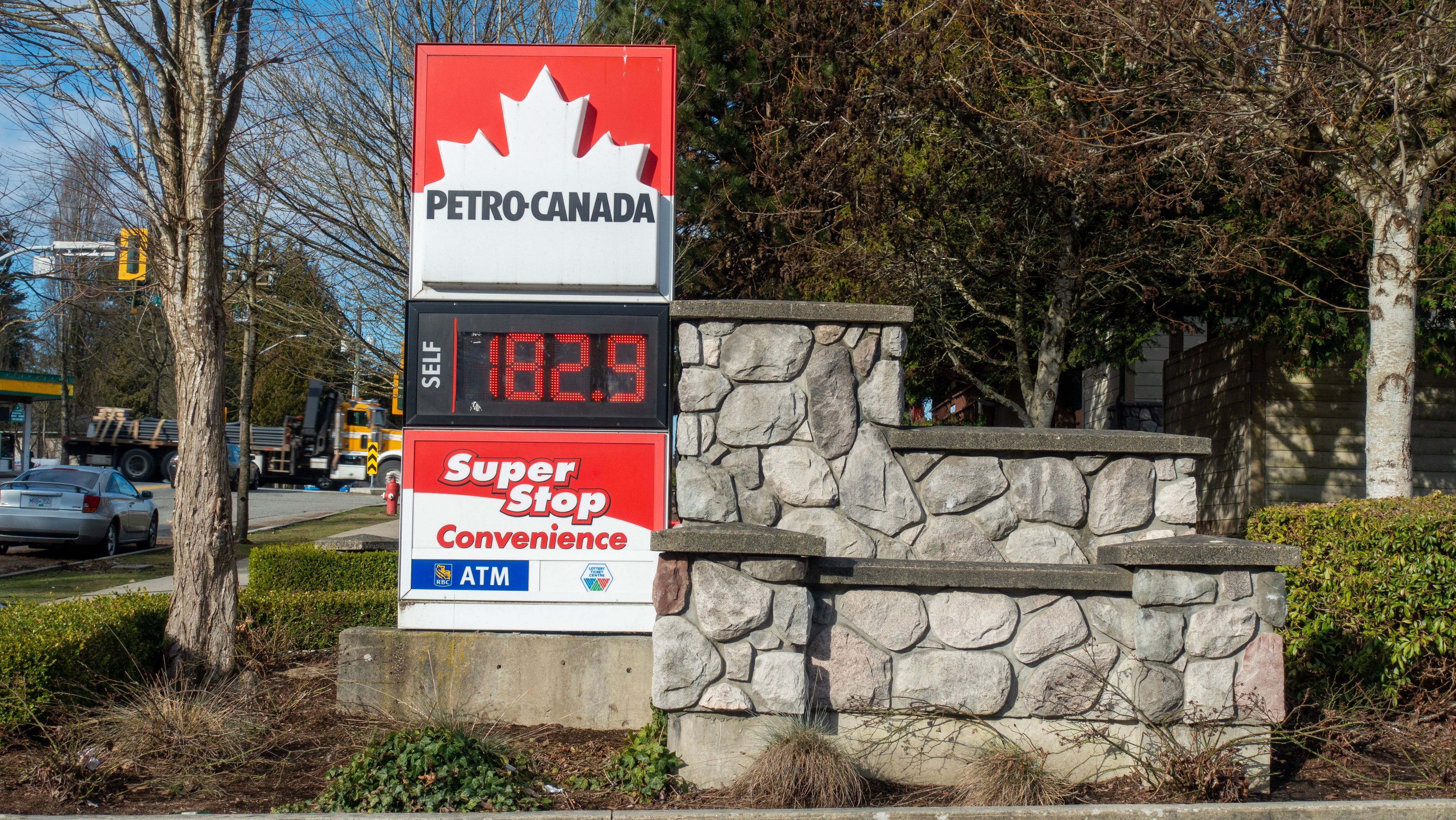
Middle East conflict, certainly been lasting longer than I think many investors expected. It’s keeping oil throughout the quarter mostly above $100 a barrel, sitting around there today. That sticker shock at the gas pump has continued what we talked about last quarter.
The implications of that are perhaps going a bit further through transportation costs, consumer prices, some inflation impact, which has helped the shift in the interest rate conversation that you talked about earlier this year of when do we get cuts or do we need cuts? Do we need more hikes? I think a more hawkish message out of the Fed from its Jackson Hole symposium in the summer reinforced some of that shift.
But the Fed and the ECB, the European Central Bank, did raise rates as well. The Bank of Canada remained on hold and trying to balance those out. But interest rates globally, bond yields at least, are climbing to multi-year highs in most developed markets, and that's reflecting some concerns about inflation, deficits, and growing debt burdens.
A difficult quarter for bonds is what sticks out for me. And I think against that backdrop, it's interesting because stocks were climbing, in most cases to all-time highs, and have since pulled back. But Canadian equities have certainly held up well in the quarter. The S&P 500 in the U.S. has remained close to its record. But we'll talk about that beneath the surface.
The advance has narrowed. It's still more concentrated, certainly supported by earnings, but still heavily influenced by those largest companies. That contrast really stuck out for me: rising borrowing, rising energy costs, and yet you see equities continue to move higher.
[03:12] [KM] Normally when you think of finance 101, higher bond yields means higher discount rates, higher discount rates should theoretically have an impact on equity valuations. That seems like they've largely shrugged it off. I'm sure there are other factors like AI and productivity gains. But do you see a genuine regime change in terms of some of those macro factors you talked about or is it more of a continuation of the same themes we've been talking about for the last couple of years?
[03:37] [SM] I think it's a slow burn regime change rather than a quarterly shock, and markets have, certainly this year, not reacted to every headline. Companies we know adapt, governments continue to negotiate or do what they do. And I think trade finds its way to other routes. It's not immediate, and it certainly does take time. That doesn't make it just noise though.
I think tariffs are changing where businesses do invest and source products, and geopolitics is impacting energy and shipping costs. And the results can be perhaps longer term or less efficient, a more inflation-prone economy in Canada, and the impact extends beyond those industries directly facing tariffs. And if the rules keep changing as they do, survey data has shown that businesses are delaying hiring and investments.
A constructive response to all of this, talking about tariffs and trade, has been a push at least to attract more capital back home. And there was that $500 billion or so announced in investment commitments at the September summit here in Toronto and some proposed tax incentives for business investment. The ultimate test will be turning all of those announcements into actual productive assets.
I think our Canadian equity team has done a good job of analyzing the impact of trade tariffs since “Liberation Day”, and coming down to a company-by-company review, looking at where those higher costs and weaker demand are impacting supply chain exposures. And for the banks, where does that overall economic weakness or where it could impact loan losses? All of those things to say, we do have a keen eye on that.
But I do think that's a slow burn regime change. It's the same issue as we've been talking about for the last couple quarters.
[05:21] [KM] That's a good point to raise. A few months ago, we did a Build Canada themed podcast, which if listeners haven't heard it, I suggest maybe going back and taking a look. But that's a theme, I think both large cap and small cap teams have been really focused on the last year or so, year and a half. It's really when the first tariff started. I think the thesis was that this would impact a lot of business models. It might take longer than you expect.
There's a lot of talk and then it takes a lot of execution. But it does seem like there's been some movement in some of these major projects, which is encouraging certainly for the oil and gas industry and all of the related second- and third-order impacts that should have. That definitely does seem constructive.
[05:56] [SM] And I know that the teams have been using some internally developed AI tools that help monitor the flow of changing sentiment when it comes to trade and how that is impacting both what's in the portfolio, where the ideas are. It's evolving, but it certainly does create opportunities and obviously risks, but certainly opportunities for stock pickers.
On the bond side, I've probably spoken more about bonds with clients in the last quarter than I have in a long period of time. I'd love to get your thoughts on what the bond market is telling us with rates being where they are. These higher yields, what's the impact for bond holders? Are we being paid to take risks where interest rates are now?
[06:45] [KM] It's usually a forgotten asset class. It's supposed to be the stable boring part of the portfolio. It's been probably anything but the last quarter.
Returns for Canadian bond investors: your traditional FTSE universe, which is basically investment-grade bonds, both government and corporate in Canada, printed a negative 3% return at the index level in the past quarter. Definitely not what investors maybe want to see: flashbacks of what happened in 2022, when rates moved up quite quickly.
We saw a little bit of that again this quarter, as you alluded to, not only on the inflation side, that continuing to be a persistent concern over the last few years and reasserting itself again this quarter. But the fiscal deficit side, that's still a theme that probably isn't going anywhere anytime soon. That's probably a multi-decade theme, quite frankly.
In the U.S., Canada, everybody's running budget deficits in relatively good times. Help us when things turn sour in the economy and they've got to print even more. Credibility of the U.S. central bank, in particular, being called into question. Although I think with the new Fed Chair, and we talked about this, I think, in the last couple podcasts, Mr. Warsh has done a reasonably good job trying to assert his independence. But nevertheless, there are still ongoing lingering questions there.
All of that taken together has pushed yields basically across the curve. Particularly impactful for investors is when those long ends, longer-term bonds, so 10- and 30-year bonds in particular, start moving up, just given how much of an impact that has on mortgage markets in the U.S., corporate borrowers, discount rates for stocks. There's lots of second- and third-order effects.
You've got five and a half in the30-year in the U.S., so that's a pretty monumental number. Canada not quite as high but still has moved up quite meaningfully as well. We've talked, I think, in the past about corporate issuers, particularly the hyperscalers, so your Microsoft, Amazons, Metas, etc.
They've issued over US$200 billion, basically, year-to-date in 2026. They're expected to do even more. That's starting to finally crowd out other borrowers. And I know our global credit team has been talking about that for over a year now. That potential, yes, there seems to be lots of appetite for that debt and those issuers are probably less rate-sensitive.
If you think AI is really an existential race to win that competition, you really don't care as much about your cost of capital. They're willing to issue, and arguably that's crowding out other issuers, maybe putting pressure on rates.
Taken together, it's been a tougher period for investors. The offset is at least equity markets have hung in there, unlike 2022, where you got the double whammy of both asset classes underperforming at the same time.
I think for us, for our portfolios, we are a little bit long duration in our Canadian bond strategy. When yields started to move up as bonds sold off, we thought that was an opportunity to maybe add a little duration. If we see a reversal of some of that outsized move in yield, that should benefit the portfolio. Small duration trade, but a tactical one.
And then with the inclusion of the global credit strategy that we added a couple of years ago, that's a much more tactical by definition strategy. It's unconstrained, so it doesn't have a duration target per se. We didn't think that you were being paid to take longer duration credit positions for quite some time now, but that has started to shift.
We added to some longer bonds over the last few quarters, and I know the team has been actually chipping away over the last few weeks as yields have really moved up. You're getting paid more for taking on the same risk, arguably less risk, because the bonds have actually sold off.
And so we've been able to add solid, triple-B, some lower investment-grade rated corporate issues that we're very familiar with at 7% to 8% yields, which is extremely attractive. If you can get 8% in your core fixed income, that's quite attractive and lock it in over the long term.
It has been a bit challenging and turbulent for investors. If you're already holding longer duration fixed income, it's been a less constructive environment. But I think for fresh capital, repositioning existing capital, or in the case of the global credit strategy, where we didn't have much duration, it's an opportunity to add to some pretty attractive yields and up the income potential for the portfolio on a go-forward basis.
[10:41] [SM] And we say one of the jobs of core bonds would be that balance in a portfolio, let's call it a quarter or a year-to-date, where returns are not stellar. Bonds are doing what they're doing when perhaps growth is pretty robust. What's the answer?
Where could investors actually return for that income stability part of the portfolio? You mentioned global credit, is that one way to supplement that? Or how are you thinking about specifically fixed income allocations today?
[11:10] [KM] That's a good point, actually, on the growth side. I didn't really talk about that. But the combination of inflation and high growth, those are both factors that arguably push rates higher.
If you think about inflation, you've got to tame that by raising rates and slowing down the economy. Although, in this case, it's more related to an energy shock. You could debate whether raising rates is actually going to impact that.
But then, obviously, if you've got higher growth, that's also a reason where typically rates go up to slow down growth. Both those factors have made it challenging for fixed income. And as a result, the traditional balance that fixed income can provide, at least in this part of the cycle, you're not necessarily going to see as much protection. If anything, having the duration can be a bit of a hindrance.
The reminder I would make for investors, though, is that this isn't the type of environment where duration really gets to shine. In other words, having longer government bonds and investment-grade corporates, is in a market selloff. Perhaps there's a shock: think COVID, think the tariff impact when it first happened, think of your classic credit crisis.
In all those situations, having the duration in your portfolio, against sensitivity interest rates, is typically where in a drawdown scenario you're going to really see the benefits of core bonds.
Having said all that, their role is not dead, in our opinion. But at the same time, if you're a 60-40 investor, so 60% equity, 40% bonds, your traditional asset allocation, our view has been for a while that perhaps you shouldn't be at 40 anymore. You need some of that, but in a way of diversifying your portfolio of having other fixed income strategies in your portfolio, global credit being one of them, doing it on an unconstrained basis where you don't have to take that duration risk unless you're getting paid to.
You're arguably being paid certainly more now than we were six months ago, a year or two years ago. And so having that combination of the ballast from your traditional fixed income, the higher income and more tactical alpha of creating opportunities in a global credit strategy, we think that's a better combination than just traditional fixed income. The role is not dead, but I think augmenting your asset allocation makes sense. And this is the type of environment where that strategy really shines.
We've covered the macro for fixed income, we have talked a little bit about credit. Of course, we are a large equity investor. The quarter was quite strong, not necessarily as strong as the first half of the year, but still quite good returns, record markets in a number of geographies around the world.
When you look under the hood, walk us through what powered the continuation of the rally. Do we see more dispersion? Is it still relatively concentrated? Where are those risks and opportunities that we're seeing right now on the equity side?
[13:43] [SM] It's certainly a narrow market, driven a lot by what we've talked about in previous quarters, which is powered by some of the AI supply chain and infrastructure behind that at different points. There were points in the quarter, certainly, where there was some broadening out, at least in the S&P 500,
But overall, a pretty volatile quarter, still being driven a lot by AI, which is a major part of the story of equity earnings, at least this year and projected into next year. The AI infrastructure and the hyperscalers are accounting for about roughly two-thirds of what the consensus believes the earnings growth will be for 2026. And the rest of the index is playing that supporting role.
The question is, are these earnings real? Are they sustainable? Our teams have highlighted some encouraging evidence coming out of the second quarter of earnings season, where we've seen some evidence of accelerating cloud revenues, expanding margins, more tangible examples of return on that spending, and then the overall message that computing demand is still exceeding that supply. There is still a lot of room to grow.
The AI earnings at this point seem real, and the companies that are driving the headline index returns are those. The headline index does sometimes mask what's underneath it, which is perhaps a weaker market breadth or participation of companies throughout the index. At the end of September, more than half of the stocks, at least in the S&P 500, were about 20% below their peaks of all time.
If you take a broader index, the Russell 3000 index, which is about 98% of U.S. publicly listed companies, more than half of those at the end of September were at least 20% below their June highs. The index, at least the S&P 500, which everyone talks about, is certainly driven by a narrow group of stocks. That is something we've discussed on this podcast throughout the year. Earnings estimates are what's behind that, the profits have risen.
It's tough for me to say investors are totally ignoring the risks, even though there's a shrinking group of companies that are leading the index, notwithstanding some of those things that are impacting the multiple of those earnings, or what investors pay for those dollars of earnings. Like interest rates being higher, being one of those.
The open question is still remaining. Longer term, are the payback assumptions reasonable to support all of the spending? That's the risk. The evidence is improving. We talked about that. But then we have everything you just said about rising interest rates raises the hurdle, and the price that you pay for those earnings still matters.
[16:38] [KM] We certainly have lots of, whether it be hyperscaler exposure, the broader AI supply chain. But having said that, it's always important to have diversification. But I think particularly now when you can make strong arguments on both sides, certainly AI is clearly a transformational technology. There is, to your point, lots of value being created from it. But at the same time, these CapEx numbers are quite staggering. These adoption curves take a long time and all those sorts of things.
Again, having that diversified approach, we, for example, trimmed quite heavily earlier in the year a lot of our memory makers. They pulled back quite a bit this quarter. It was painful at the time trimming them as they were doing so well and basically going up in a parabolic fashion. But good risk management is such that when valuations move at very extreme levels, you should be taking profits, which we did.
And that ultimately was beneficial. It took a little while for it to play out. But certainly, diversification is important in a market like this. Even though it can be painful when you have that narrow leadership.
[17:35] [SM] It's a cost. There's a cost to insurance and there's a purpose for insurance. And we've said before, why do we build portfolios in the first place? Why not put everything into one stock? Because we can't predict the future to that degree of accuracy. That's why we build those diversified portfolios that come at a cost.
[17:52] [KM] Why don't we wrap up with asset allocation? There has been lots of volatility in the quarter, more so maybe on the fixed income side, but certainly lots of movement. How were we positioned? What changes do we make? What are we thinking overall in terms of our tactical asset allocation?
[18:09] [SM] The balanced strategy benefited from a modest equity overweight through the quarter. And then in late August, we did take profits in the international and emerging market side of the equity portion of the portfolio and moved equities back to closer to a neutral weight and used some of those proceeds to top up more shorter duration fixed income, like you talked about, global credit and also cash.
And that certainly worked out well, very short term over a month, but as equities weakened in September, that was a pretty good trade. And what became more attractive was the income opportunity available in fixed income.
As of October 5th, Canadian bonds yielding just over 4%, global credit close to 6%, those higher starting yields do improve the prospective return opportunities. And of course, they do not eliminate interest rate risk or credit risk or guarantee the eventual return, but certainly a higher starting point is attractive.
I think those starting yields are improving prospective returns going forward, and they don't eliminate interest rate risk or credit risk, or their eventual return. But those are starting points, the shorter duration positioning we have underweighted to Canadian bonds has helped cushion that pressure from a scenario where rates remain high or move higher. And I think we're positioned against that.
The team's done well in terms of not deliberately reacting to every geopolitical headline or commodity price move and making an allocation decision accordingly. We still are focused as part of our process on valuations, prospective returns, and the risk that we're actually being paid to take. And that, as you just said, the quarter reinforces all of that around diversification rather than just making wholesale portfolio changes around headlines.
[19:53] [KM] I don't want to overemphasize trades that have been made in the last month, but nevertheless, that was the change we made. And it has worked out at least so far. We'll see how the future plays out there. I think that's a good place to stop. That's always great talking to you, Stu, and looking forward to doing this again next quarter.
Hi, everyone, Kevin here again. To subscribe to The Art of Boring podcast, go to Mawer.com. That's M A W E R dot com forward slash podcast, or wherever you download your podcasts. If you enjoyed this episode, please leave a review on iTunes, which will help more people discover the Be Boring, Make Money philosophy. Thanks for listening.
Companies Mentioned:
Microsoft
Amazon
Meta



 podcast